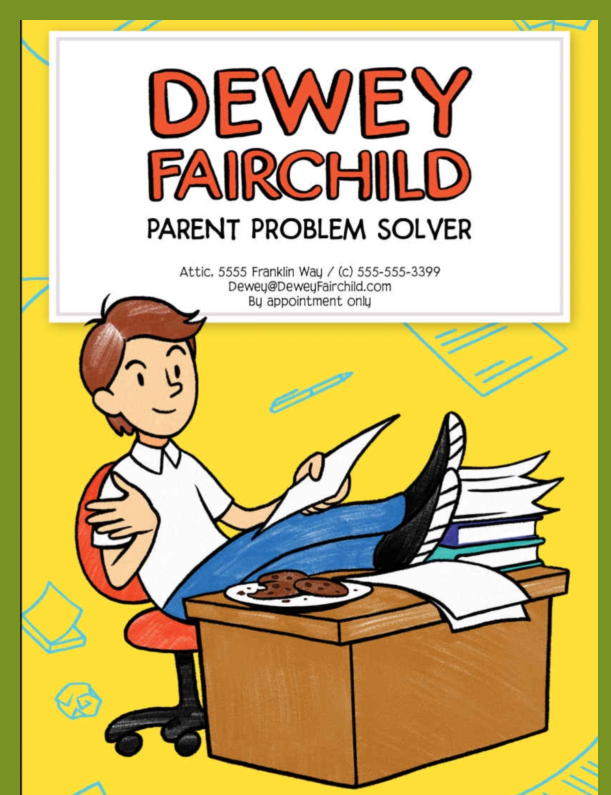
FILE 01 • 2017
Parent Problem Solver
Dewey turns his talent for handling impossible grown-ups into a secret attic business—until his own parents become the case he cannot ignore.
DEWEY'S MASTER INDEX
Lorri Horn's three funny middle grade problem-solving books follow eleven-year-old Dewey Fairchild as his secret business expands from parents to teachers to siblings. The cases get stranger. The office gets busier. Clara keeps baking.
THE BOOKS
Each book adds a new problem category while preserving the same basic engine: a kid complaint, an investigation, a pile of evidence, and a solution that may or may not behave itself.
FILE 01 • 2017
Dewey turns his talent for handling impossible grown-ups into a secret attic business—until his own parents become the case he cannot ignore.
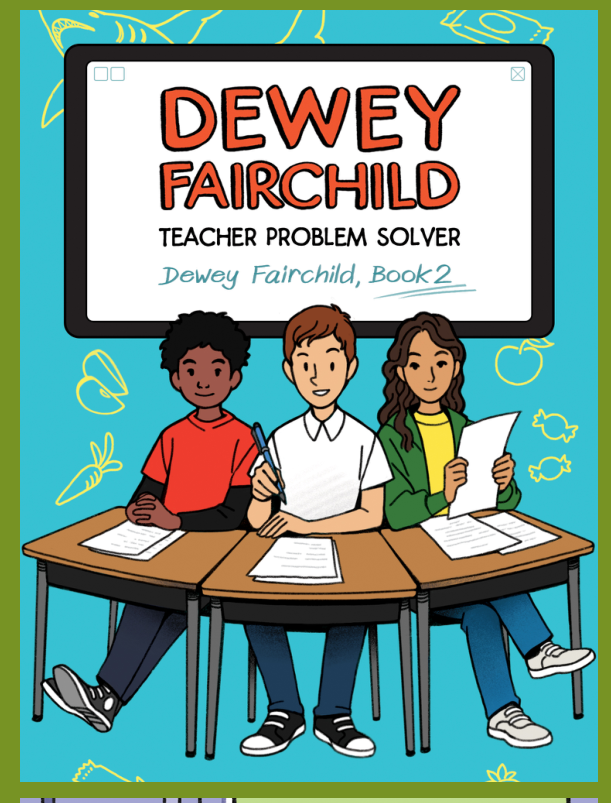
FILE 02 • 2018
Now in middle school, Dewey adds troublesome teachers and school policies to the docket. Research, student voice, vending machines, and ridiculous plans follow.
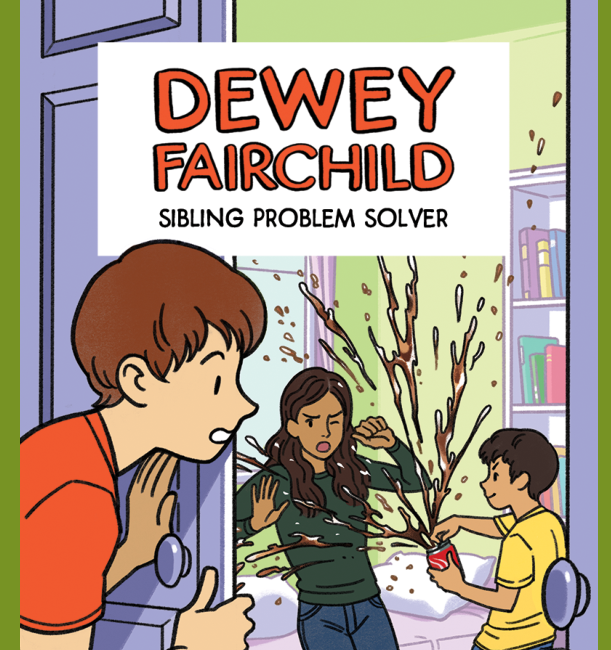
FILE 03 • 2019
The sibling division opens with electronics and social media, teasing and retaliation, privacy and attention, and Dewey's own sisters becoming part of the evidence.
CLARA'S FILING CABINET
Ask Clara. Search all three books for a person, case, classroom, hiding place, cookie, gadget, phrase, method, or major turning point—and then follow the file back to the right drawer.
WHAT CHANGES ACROSS THE SERIES?
Parent cases establish the secret business. Teacher cases push Dewey into school systems and research. Sibling cases force him to compare multiple family perspectives—and sometimes use his own relationships as evidence.
PARENTS
The original cases teach Dewey how to listen, observe homes and adults, use friends as collaborators, and keep asking what is really producing the behavior.
TEACHERS
Teacher cases add classrooms, policies, school culture, research, and more complicated questions about whether a problem belongs to one person or the environment around them.
SIBLINGS
Book 3 repeatedly turns on competing needs: attention versus space, freedom versus family rules, privacy versus connection. A useful answer has to account for more than the loudest complaint.
DEWEY
By the sibling cases, Dewey cannot pretend his own family life is irrelevant. Stephanie and Pooh Bear teach him things he later uses in client work, and the secret office itself becomes a family problem.
WHO IS THIS FOR?
The series project materials identify the books for ages 9–12 and grades 4–7, while Lorri's Book 1 curriculum guide specifically supports grades 3–5 and older struggling readers. That makes Dewey useful for independent readers, family reading, classroom discussion, and readers who respond to humor and highly concrete problems.
OFFICE DIRECTORY
Dewey does not operate alone. Clara keeps the office moving, Wolfie occupies the canine department, and Seraphina and Colin keep showing up whenever the case gets complicated. Dewey's family increasingly becomes part of the archive too.
THE FILE HAS HISTORY
Parent Problem Solver received a starred Kirkus review and was included among Kirkus' Best Middle-Grade Books of 2017. The project archive also preserves teacher materials, press history, reviews, interviews, and television-development work.